DISCFIELD / Start here
Choosing your first fairway driver

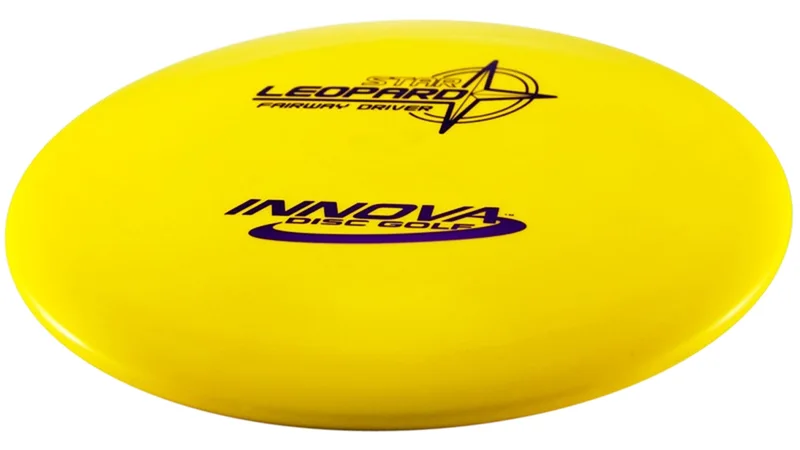
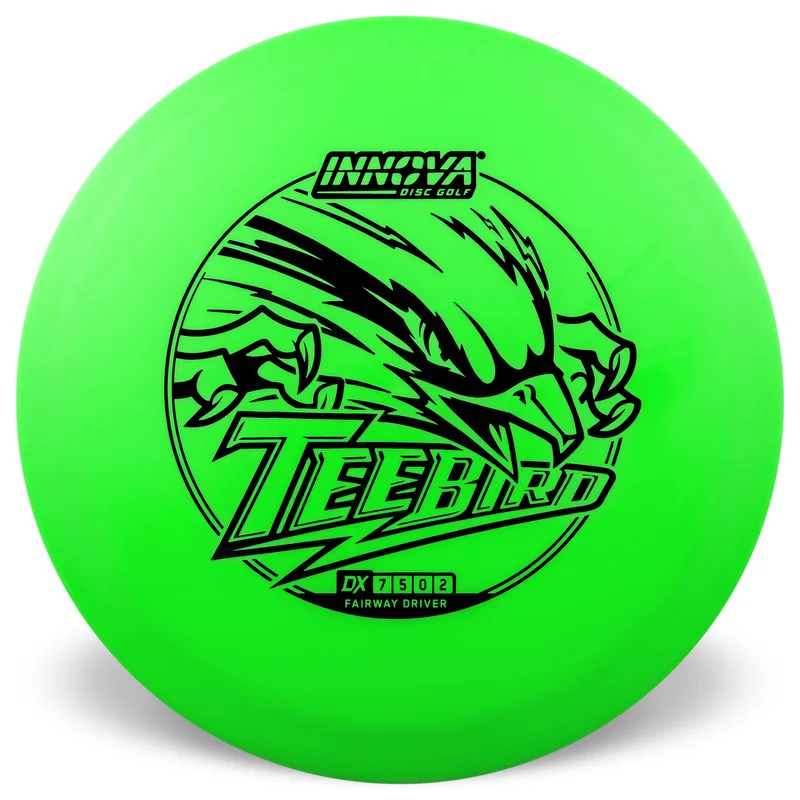
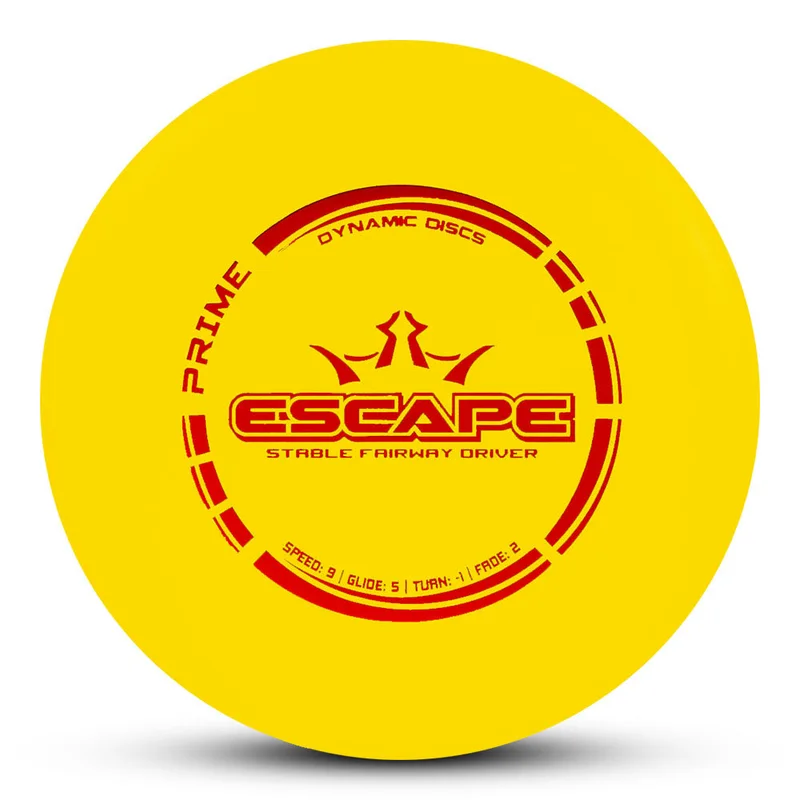
Start with the Leopard from this collection if you are buying your first fairway driver. Move to a TeeBird or Escape only when you can name what your current disc is missing. Treat the Firebird as a specialized choice, not the final step of a beginner upgrade ladder.
Four drivers, four choices
| Disc | Reference rating | Choose it for |
|---|---|---|
| Leopard | 6 / 5 / -2 / 1 | Exploring a first fairway driver |
| TeeBird | 7 / 5 / 0 / 2 | Less rated turn and a firmer finish |
| Escape | 9 / 5 / -1 / 2 | Exploring a faster control-driver role |
| Firebird | 9 / 3 / 0 / 4 | A deliberate strong-fade utility shot |
Sources: Innova's comparison table and Dynamic Discs' Escape page, checked September 10, 2026. Our choices interpret those references; they are not a four-disc field test.
Why start slower?
Innova's rating guidance explains that faster discs require more power. A bigger speed number therefore is not a purchase guarantee of more distance.
The Leopard is our starting pick because it lets you try the fairway role at a lower speed than the other drivers here. If you already own a driver you throw comfortably, you do not need to replace it to follow this guide. If you are choosing between the Leopard and the faster Leopard3, read Leopard vs Leopard3.
Other brands make slow, turning drivers for the same first step. MVP says the Signal (6 / 5 / -3 / 1) will be its easiest-throwing driver for a beginner, and Westside designed the Underworld (7 / 6 / -3 / 1) with newer players in mind.
Start by comparing the driver with your midrange. If it reaches no useful extra area and makes your common miss larger, keep the midrange as your main throwing disc.
When the Escape makes sense
We mainly use our Escape off the tee on longer holes, and it is a favorite. That describes our own rounds; a new player may get a different result.
Try an Escape when you want to explore a faster driver and can judge it against a familiar slower disc. Compare comfortable throws and usable landing areas rather than a single maximum-distance effort. Dynamic Discs makes the slower Breakout (8 / 5 / -1 / 1.5) for players who find that the Escape goes too far.
Why the Firebird is different
Matching speed numbers do not make the Escape and Firebird substitutes. Their reference turn and fade describe substantially different intended shapes. Read the Firebird guide if you need a strong finishing curve; do not buy it simply to “advance” beyond a Leopard.
Similarly, the TeeBird is a different choice about turn and finish, not a required stage before speed 9. Innova's TeeBird3 (8 / 4 / 0 / 2) has the same turn and fade as the TeeBird, with one more point of speed and one less of glide. When a fairway driver no longer keeps up with your arm, our distance driver guide covers that next step.
Plastic, weight and budget
Before buying, check the exact name, plastic and marked weight. Our disc weight guide explains when to try a lighter copy and how to compare weights. For Innova options, use the DX, Star and Champion guide. Set a replacement budget you can tolerate if the disc is lost. A special edition does not have to be your learning disc.
After a few rounds, finish this sentence: “I use this driver instead of my midrange when…” If you cannot finish it, more practice with your current discs is a sensible next step.
Read next
- Disc golf beginner guide: choose your first discs and build a bag
- Leopard vs Leopard3: flight numbers and which driver to choose
- Distance drivers: when you need one and which to choose
- Disc golf disc weight guide: which weight should you choose?
- Best disc golf discs for beginners: a simple 2–3 disc bag
- How to throw farther in disc golf: distance tips for beginners